The success of modern implant dentistry is built upon a simple requirement: a healthy and sufficient jawbone. For the vast majority of patients receiving dental implants, the standard procedure involves placing an implant into the bone. But what is the solution for a patient who has experienced significant bone loss and is not a candidate for these conventional methods? For these specific and complex cases, a specialised alternative exists: the subperiosteal implants. While less common today, understanding this technology is important. At Ardent Sidcup Dental Clinic, we believe in educating our patients on the full spectrum of available treatments. This guide will provide a clear, professional overview of subperiosteal implants, explaining how they work, their unique benefits, and who may be a suitable candidate.
What Are Subperiosteal Implants?
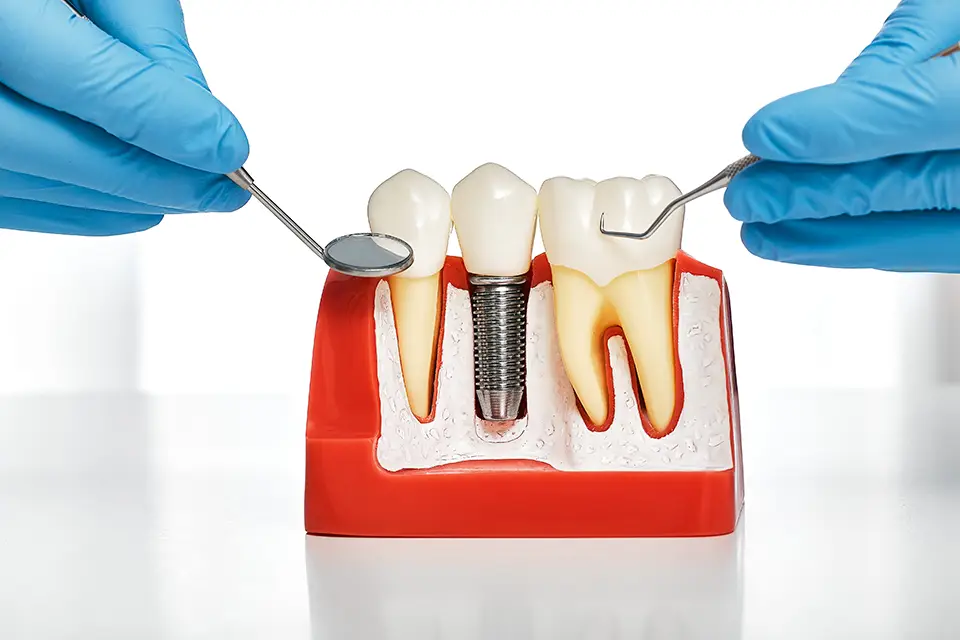
Let’s first clarify the terminology. “Sub” means under, and “periosteal” refers to the periosteum, the thin membrane covering the surface of our bones. Subperiosteal implants, therefore, are custom-fabricated metal frameworks that are designed to sit under the gum tissue but rest directly on top of the jawbone, rather than being placed inside it.
This framework is meticulously crafted from a 3D model of your jawbone to ensure a perfect, passive fit, following the bone’s natural contours. Small posts on the framework then protrude through the gum tissue to act as secure anchors for a full or partial denture. When discussing different types of dental implants, the subperiosteal implant represents a fundamentally different philosophy, engineered to work with the existing bone structure.
Subperiosteal Implants Pros and Cons
As with any advanced medical procedure, it is important to have a balanced understanding of the advantages and considerations. At Ardent Sidcup Dental Clinic, we ensure our patients have a clear picture before making any decisions.
The Pros:
- Avoids the Need for Bone Grafting: This is its primary advantage. For patients with insufficient bone for conventional implants who cannot or do not wish to undergo extensive bone grafting, subperiosteal implants can be excellent alternatives.
- A Solution for Severe Bone Loss: It is specifically designed for individuals with significant jawbone atrophy, providing a stable foundation where one might not otherwise be possible.
- Custom-Made for a Precise Fit: Each framework is a bespoke device, crafted to fit the unique anatomy of your jawbone with exceptional precision.
The Cons:
- A More Complex Surgical Procedure: The placement of subperiosteal implants are more complex and invasive surgical procedures compared to the placement of standard endosteal implants.
- Limited Long-Term Data: While they have been used successfully for decades, they are less common today and do not have the same volume of extensive, long-term clinical data supporting them as conventional implants.
- Higher Cost: The custom fabrication and surgical complexity generally make this a more significant financial investment.
Who Is a Good Candidate for Subperiosteal Implants?
The candidacy for a subperiosteal implant is very specific. This is not a first-line treatment, but rather a specialised solution for a particular set of clinical circumstances. An ideal candidate is typically someone who:
- Has experienced severe jawbone resorption (bone loss).
- Is unable or unwilling to undergo the series of bone grafting procedures required to become a candidate for traditional implants.
- Requires a stable foundation for a full denture and has found that conventional dentures do not provide adequate stability or comfort.
A thorough clinical and radiographic examination is essential to determine if subperiosteal implants are the most appropriate and safest course of treatment for you.
Materials Used in Subperiosteal Implants
The material used to create subperiosteal implants must be exceptionally strong, durable, and biocompatible. For these reasons, the frameworks are almost exclusively fabricated from:
- Surgical-Grade Titanium or Titanium Alloys: Just as with conventional implants, titanium is the material of choice. It is renowned for its immense strength, resistance to corrosion, and excellent biocompatibility, ensuring the implant can provide a stable and lasting foundation.
Subperiosteal Implants Cost
The cost of a subperiosteal implant is a significant consideration, and it is important to view it as a long-term investment in your health and quality of life. As a highly specialised and custom-made device, its cost is substantially higher than a single conventional implant.
While a final fee can only be determined after a full clinical assessment, patients in the UK should anticipate that the investment for a subperiosteal implant to support a denture will be a multi-thousand-pound procedure, often starting from £6,000 to £10,000 and upwards, depending on the complexity and scope of the treatment. This reflects the custom laboratory fabrication and the advanced surgical protocol required. During your consultation at our Sidcup clinic, we will provide a comprehensive and transparent breakdown of all costs associated with the procedure.
Conclusion
Subperiosteal implants are remarkable examples of dental innovation, providing viable and effective solutions for a very specific group of patients who might otherwise have no other options for a stable tooth replacement. While advancements in bone grafting and other implant technologies have made them less common, they remain an important part of the dental implant landscape. They serve as a testament to the field’s commitment to finding solutions for even the most challenging clinical situations.
If you are struggling with severe bone loss and are looking for a stable, long-term solution, we invite you to contact Ardent Sidcup Dental Clinic to schedule a comprehensive consultation.