Before placing dental implants, your dentist may recommend a 3D dental X-ray called a Cone Beam Computed Tomography (CBCT) scan. Unlike a standard dental X-ray, it creates three-dimensional images of the jawbone, nearby nerves and sinuses. These images help measure bone height and width and guide implant positioning when more detail is needed.
Not everyone needs a CBCT scan. Your dentist will review existing X-rays and assess whether further imaging could help plan treatment, including possible bone grafting. The NHS CBCT guide explains how the scan works and the radiation involved.
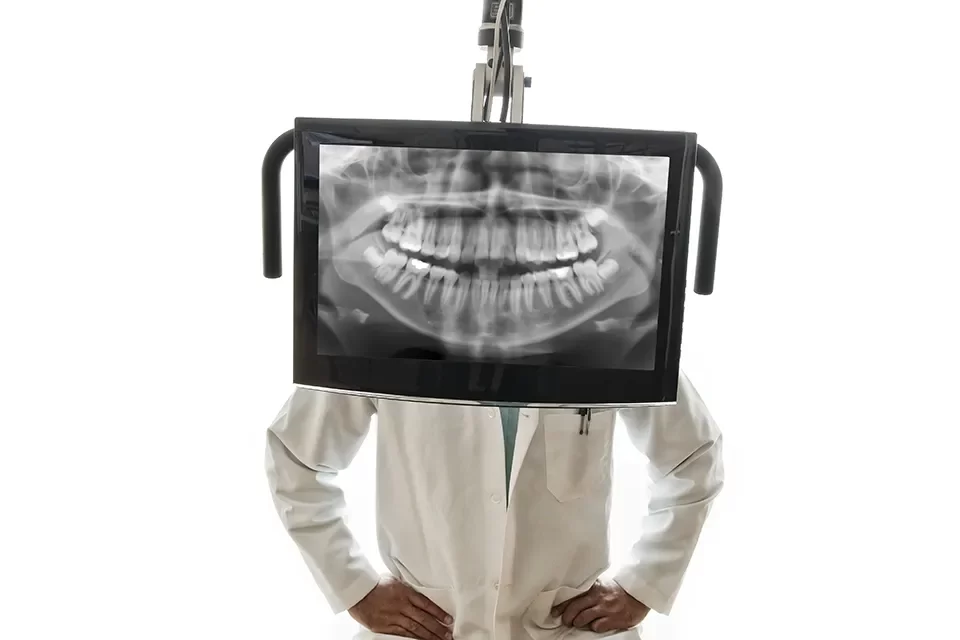
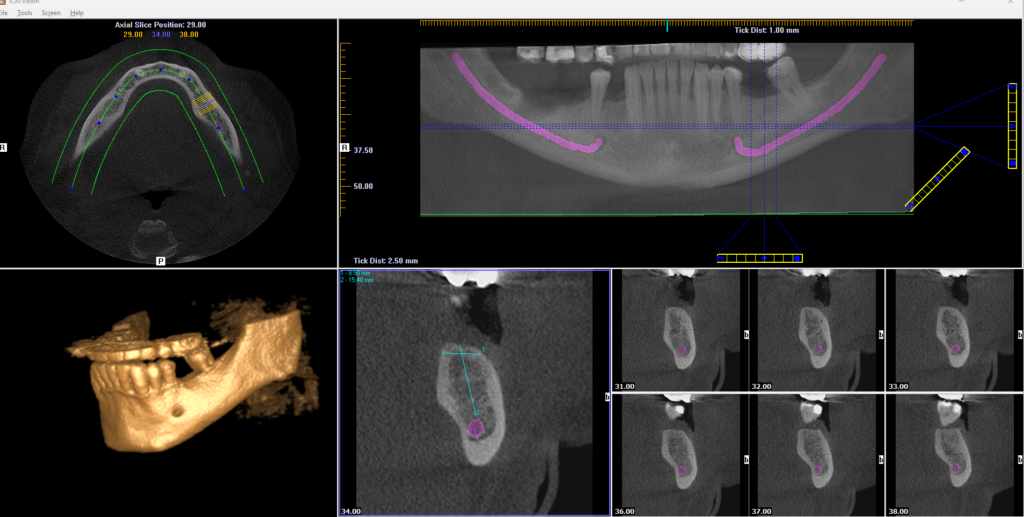
A CBCT scan is a type of dental imaging that creates three-dimensional pictures of your teeth, jawbone and nearby structures. It can give your dentist information that ordinary two-dimensional dental X-rays may not show, particularly when planning complex treatment.
Yes, sometimes standard dental X-rays provide enough information. A CBCT scan may be recommended when your dentist needs a clearer view of the jawbone, nerves or sinuses before implant treatment. The choice depends on your individual assessment.
CBCT uses ionising radiation, so it carries a small risk rather than being completely risk-free. Your dentist should recommend it only when the expected benefit outweighs that risk and use an appropriate scan area and radiation dose.
It may. Some practices include CBCT imaging in an implant treatment plan, while others charge separately. Before having a scan, ask whether it is needed, what the fee covers and whether the cost is included in your written estimate.
No. A CBCT scan isn’t automatically required for every implant patient. Your dentist will consider your examination, existing X-rays and the complexity of the planned surgery before deciding whether three-dimensional imaging would provide useful additional information.
CBCT can show the height and width of the jawbone and the position of important structures, including nearby nerves and the maxillary sinuses. This can help your dentist assess the available space and plan suitable implant positions.
The dose varies depending on the machine, scan settings and area examined. Dental CBCT generally involves more radiation than a conventional dental X-ray but less than a typical medical CT scan of the same area. Your dentist should explain why it is justified.
No, the scan itself is painless. You’ll usually stand or sit still while the scanner moves around your head. Image capture is generally brief, although positioning and the full appointment take longer. Follow the instructions given by your scanning team.
It can help your dentist measure the shape and amount of jawbone available for implants. Those images, alongside a clinical examination, may show whether bone grafting should be considered. The scan alone doesn’t determine your complete treatment plan.
You may be asked to remove glasses, jewellery, dentures or other metal items around your head and neck. Tell the scanning team if you might be pregnant. They’ll explain any preparation needed and how to stay still during the scan.
Wondering whether a 3D dental scan is needed before your implant treatment? At Ardent Sidcup, we’ll discuss your options, explain any recommended imaging and answer your questions before treatment begins. Contact our Sidcup dental team if you’d like to arrange an implant consultation or request a call back.