Missing teeth can make chewing awkward all the time, and believe me, it affects your speech and leaves you feeling self-conscious when you smile. Worse still, nearby teeth may slowly drift into the empty space. Bridge work dental offers a fixed way to close that gap and restore everyday function. However, choosing treatment can feel difficult when you’re comparing costs, materials and different dental bridge types.
You may also worry about pain, tooth preparation or how long the result will last. This guide explains the dental bridge procedure, NHS and private costs, possible risks and proper bridgework care. You’ll also learn how a tooth bridge compares with implants and dentures.
What Is Bridge Work Dental and How Does It Work?
What Is a Dental Bridge?
A dental bridge is a fixed replacement for one or more missing teeth. The artificial replacement is called a pontic, while the supporting teeth or implants act as abutments. The NHS describes a bridge as “a fixed replacement for a missing tooth or teeth.”
How Does a Tooth Bridge Work?
A tooth bridge spans the empty space much like a small architectural bridge. Crowns, bonded wings or implants keep it steady while the pontic restores the visible tooth. Most designs remain fixed inside your mouth, so you don’t remove them for cleaning like a denture.
When Might You Need a Dental Bridge?
Who May Benefit From Bridge Teeth?
You may consider bridge teeth after losing a tooth through decay, gum disease, injury or extraction. A single tooth bridge can close one gap, while longer restorations may replace several missing teeth. Front teeth need careful colour matching. Back teeth require greater strength for chewing.
Who May Not Be Suitable?
Strong foundations matter. Active decay, untreated gum disease, weak supporting teeth or poor cleaning can make bridging treatment unreliable. Heavy grinding may also overload the restoration. Your dentist may first control infection, stabilise your gums or discuss implants and dentures before recommending a bridge.
Want a personalized price? View our dental bridges service and arrange an assessment with our dental team.
What Are the Different Types of Dental Bridges?
Traditional and Cantilever Bridges
A traditional fixed bridge dental design uses crowns placed over teeth beside the gap. It offers firm support, although the dentist must permanently reshape those teeth. A cantilever bridge attaches at one side only, so dentists use it carefully where biting pressure remains relatively light.
Maryland and Implant-Supported Bridges
A Maryland or glued bridge dental restoration uses a metal or ceramic wing bonded behind a nearby tooth. It often suits a front tooth bridge because little drilling may be needed. Implant-supported bridges avoid cutting neighbouring teeth, although they require surgery, suitable bone and additional healing time.
What Happens During the Dental Bridge Procedure?
Consultation and Tooth Preparation
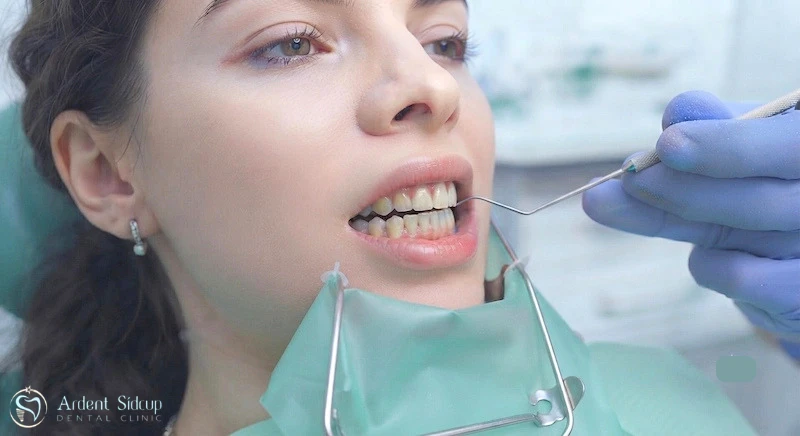
The dental bridge procedure begins with an examination, X-rays and a bite assessment. Your dentist checks your gums, supporting teeth and available space. For a conventional bridge, local anaesthetic keeps you comfortable while the dentist reshapes the supporting teeth and removes weakened material.
Temporary and Permanent Bridge Placement
Next, impressions or digital scans guide the dental laboratory. You may wear a temporary bridge dental restoration while the permanent bridge is made. At the fitting visit, the dentist checks its shade, contact points and bite before making small adjustments and cementing it securely.
How Much Does Bridge Work Dental Cost?
NHS Dental Bridge Costs Across the UK
In England, clinically necessary bridges fall within NHS Band 3, which costs £332.10 from 1 April 2026. Wales lists a Crown or Bridge care package at £140.44. Scotland charges paying adults 80% of treatment costs, capped at £384 for each course. Northern Ireland uses itemised Health Service charges.
| UK nation | Current NHS charging approach |
| England | Band 3: £332.10 |
| Wales | Crown or Bridge package: £140.44 |
| Scotland | 80% contribution, capped at £384 |
| Northern Ireland | Itemised charges in the treatment plan |
Ready to restore your smile? Explore our NHS dentistry in Sidcup and book a consultation to find the right option for your missing tooth.
Private Dental Bridge Costs and Price Factors
Published 2026 fee lists show private prices from roughly £530 to £1,100 per bridge unit. A common three-unit bridge replaces one tooth using two supporting units and one pontic. Therefore, material, laboratory work, scans, location and supporting-tooth treatment can quickly increase the final quotation.
What Are the Benefits and Risks of Dental Bridges?
Main Benefits of Bridgework Teeth
Well-planned bridgework teeth can improve chewing, speech and smile balance. A fixed restoration doesn’t move like a removable plate. It may also limit movement from neighbouring teeth into the gap. Conventional bridges usually finish sooner than implants because they don’t require surgical healing.
Risks, Complications and Lifespan
Conventional bridges require permanent enamel removal. Plaque may collect beneath the pontic, while supporting teeth can develop decay, gum problems or nerve damage. Leeds Teaching Hospitals reports that around 80% of conventional bridges last at least ten years. About 80% of adhesive bridges last five years or longer.
Is Getting a Dental Bridge Painful?
Comfort During the Appointment
Getting a bridge for teeth shouldn’t feel painful because local anaesthetic numbs the treatment area. You may still notice vibration, water or pressure. Tell the dental team immediately if you feel discomfort. Nervous patients can also discuss breaks, slower appointments or suitable anxiety-management options beforehand.
Recovery and Warning Signs
Mild gum tenderness or temperature sensitivity may occur for several days. A new bridge in mouth can also feel unfamiliar at first. Contact your dentist if pain becomes stronger, your bite feels uneven, the bridge moves or swelling develops. A quick adjustment may prevent further strain.
How Do You Care for a Dental Bridge?
Daily Cleaning Under Bridgework
Brush twice daily with fluoride toothpaste and clean beneath the false tooth every day. Standard floss can’t pass down between connected bridge units. Instead, use bridge floss, a floss threader or a suitable interdental brush to remove plaque from the hidden gumline.
Eating and Long-Term Maintenance
Most people return to normal eating after adapting. However, hard sweets, ice and sticky foods can damage bridge crown teeth. Regular dental examinations can reveal early decay before pain begins.
A useful maintenance routine includes:
- brushing every morning and evening;
- cleaning beneath the pontic daily;
- avoiding biting pens or packaging;
- reducing frequent sugary snacks;
- wearing a night guard when prescribed.
Dental Bridge vs Implant vs Denture: Which Is Better?
Comparing Missing-Tooth Treatments
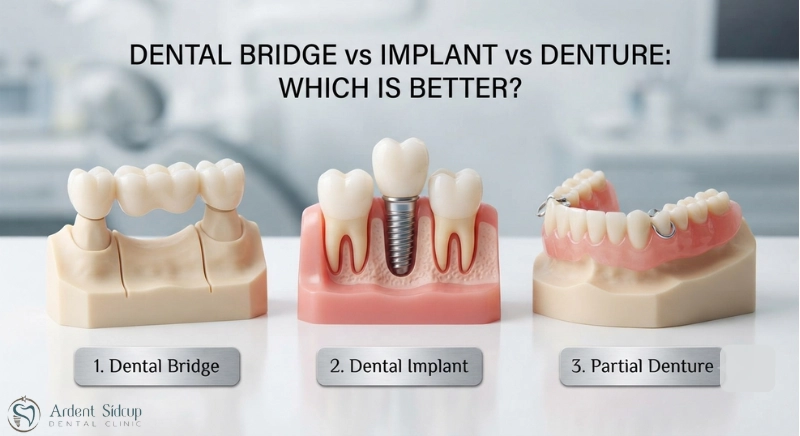
A dental bridge missing tooth solution stays fixed and usually avoids surgery. However, conventional designs may alter nearby teeth. An implant replaces the missing root without preparing neighbouring enamel. A partial denture often has a lower starting cost and can replace several teeth, although you must remove it for cleaning.
| Factor | Dental bridge | Dental implant | Partial denture |
| Design | Fixed | Fixed | Removable |
| Surgery needed | Usually no | Yes | No |
| Nearby teeth | May need preparation | Usually unchanged | May provide support |
| Treatment time | Moderate | Longer | Often shorter |
| Initial private cost | Medium to high | Usually highest | Usually lowest |
| Cleaning | Under the bridge | Around the implant | Outside the mouth |
Choosing the Right Option
Think beyond today’s price. Consider gum health, bone levels, supporting teeth, appearance, cleaning ability and future repair costs. For example, an implant may protect untouched neighbouring teeth. In contrast, a conventional bridge dental restoration may suit heavily filled teeth that already need crowns.
Illustrative case study: A patient loses one premolar between two heavily restored teeth. Crowning those teeth may support a bridge without sacrificing healthy enamel. Another patient with untouched neighbouring teeth may benefit more from an implant. The same gap can require a completely different solution.
Frequently Asked Questions About Bridge Work Dental
Can a Dental Bridge Replace One Tooth?
Yes. A dental bridge for one tooth often includes two supporting crowns and one pontic, creating a three-unit bridge. A Maryland design may instead use one or two bonded wings.
Is a Dental Bridge Permanent?
A bridge is permanent because you can’t remove it yourself. However, a fixed bridge for teeth isn’t guaranteed to last forever. It may eventually need recementing, repair or complete replacement.
What Does a Dental Bridge Look Like?
A false tooth bridge follows the shape and colour of natural teeth. Traditional designs include tooth-coloured crowns, while Maryland wings normally remain hidden behind the supporting teeth.
How Long Does Dental Bridgework Last?
Many conventional bridges last ten years or longer. However, hygiene, grinding, bite pressure and supporting-tooth health affect longevity. Adhesive bridges may loosen sooner, although dentists can sometimes rebond them.
Can You Get a Tooth Bridge on the NHS?
Yes, when your dentist considers a tooth bridge NHS treatment clinically necessary. Available designs, materials and patient charges differ across England, Wales, Scotland and Northern Ireland.
Can You Eat Normally With a Dental Bridge?
Usually, yes. Start with softer food if the area feels tender, then return gradually to your usual diet. Avoid cracking very hard food directly over a molar bridge.
Conclusion
Bridge work dental treatment can replace missing teeth without a removable appliance. Traditional, Maryland, cantilever and implant-supported designs each suit different gaps. Your cost depends on the design, number of units, materials and supporting treatment.
Ask for a written plan covering preparation, materials, alternatives and maintenance. With healthy foundations and thorough cleaning, a carefully designed bridge can restore comfort, confidence and reliable function for many years.